Mallorcan cheese in Manacor: what 20, 45 and 100 days do to a wheel
The maturity decides the plate. Semi-cured starts at 20 days, cured at 45, aged at 100, and each step changes the texture before it changes the taste.
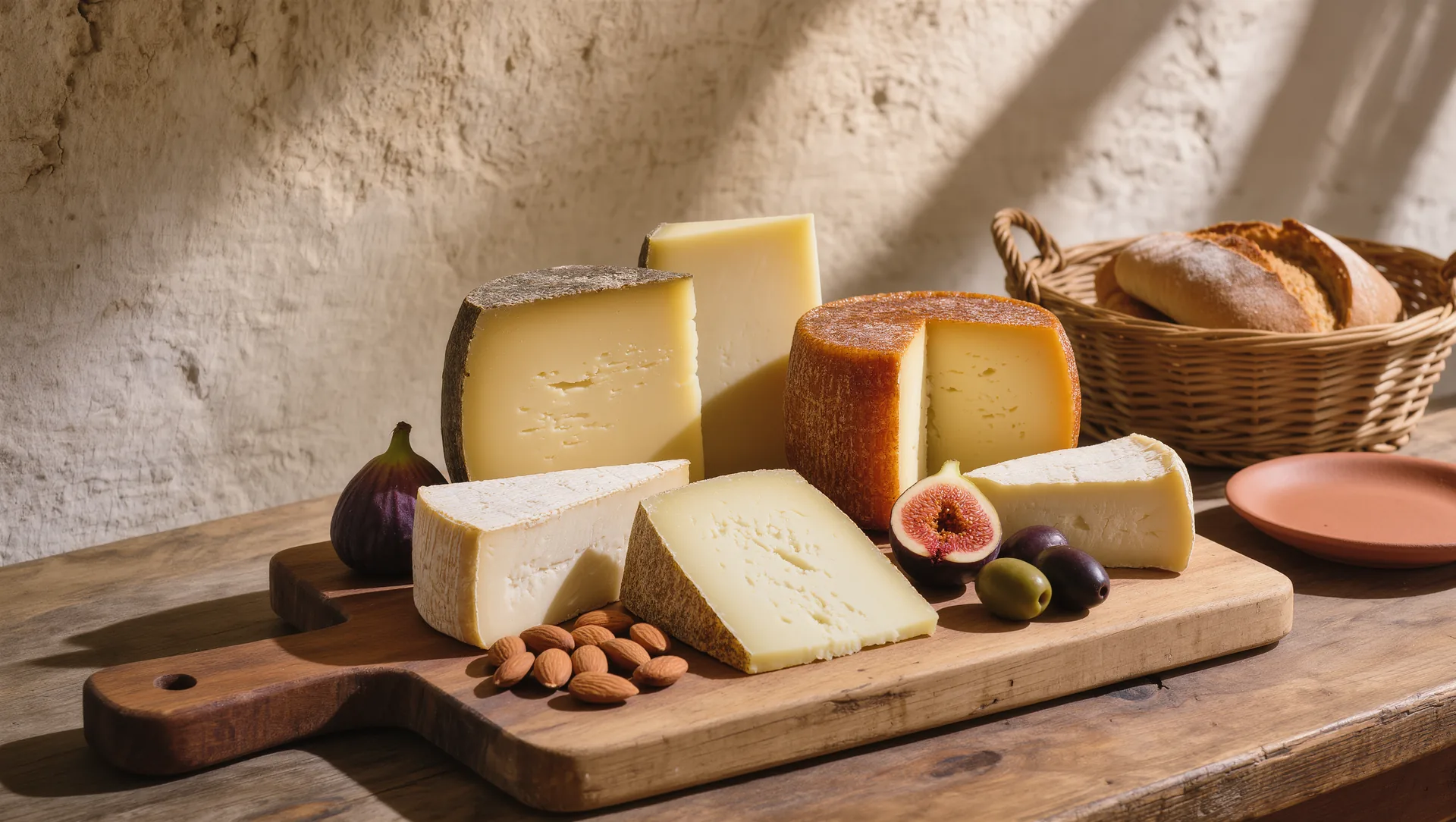
Ask for cheese in Manacor and the useful question is not which farm it came from but how long it sat. Mallorcan cheese is sold in three maturities, and the thresholds are fixed: semi-cured from 20 days, cured from 45 days, aged from 100 days. Everything else on the plate follows from that number, the crumble, the salt, the depth of the colour.
Three maturities, three different products
Formatge mallorquí is made on the island from pasteurised milk, and unlike most Spanish cheeses it is not tied to a single animal: cow, sheep and goat milk are all used, alone or blended. A semi-cured wheel at 20 days is still pale, elastic and mild enough to eat in slabs. At 45 days the paste tightens and the salt comes forward. Past 100 days the wheel dries, the colour deepens toward amber and the texture turns brittle, which is when it stops being a sandwich cheese and starts being something you shave.
| Maturity | Minimum age | Texture | How it is usually eaten |
|---|---|---|---|
| Semi-cured | 20 days | Elastic, pale | Thick slices, bread, tomato |
| Cured | 45 days | Firm, drier | Thin slices, olives, almonds |
| Aged | 100 days | Brittle, amber | Shaved, over vegetables or alone |
The Menorca distinction that confuses everyone
The protected cheese of the Balearics is Mahón-Menorca, and its rules are strict in a way Mallorcan cheese is not. It is made from cow's milk only, and under the protected designation it may be produced and matured on Menorca alone, in two versions: one from milk that has undergone a conservation treatment such as pasteurisation, and an artisan version from raw cow's milk. So a cheese board on Mallorca that includes Mahón-Menorca is serving an import from the next island, which is a fine thing to do and worth knowing before you call it local.
Why Manacor is a sensible place to eat it
Manacor is not a resort that happens to have restaurants. With 47,777 residents as of January 2024 it is the second most populous municipality on Mallorca after Palma, a working town in the middle of the island with its own supply lines to the farms of the Pla. The town was raised to town status in 1912 on the back of industry rather than tourism, above all the artificial pearl trade that began with a factory founded in 1897 and still turns out around 50 million pearls a year.
The practical effect for a visitor is that lunch here is priced for people who live here. For the opposite experience, a village that fills up for one morning a week, see our guide to the Sunday market at Santa María del Camí.
How to order without a script
Three sentences are enough. Ask for the cheese of the house and which maturity it is. Ask for it cut thick under 45 days and thin over it. Ask what comes with it, because the standard companions on this island are bread, olives, almonds and figs in season, not a sauce. If the answer to the first question is a brand name rather than a number of days, the cheese came off a lorry.
Sources
What is the difference between semi-cured and cured?
Is Mallorcan cheese made from sheep milk?
Is Mahón cheese Mallorcan?
How long does an aged wheel keep?
What is served with cheese here?
More from Restaurant
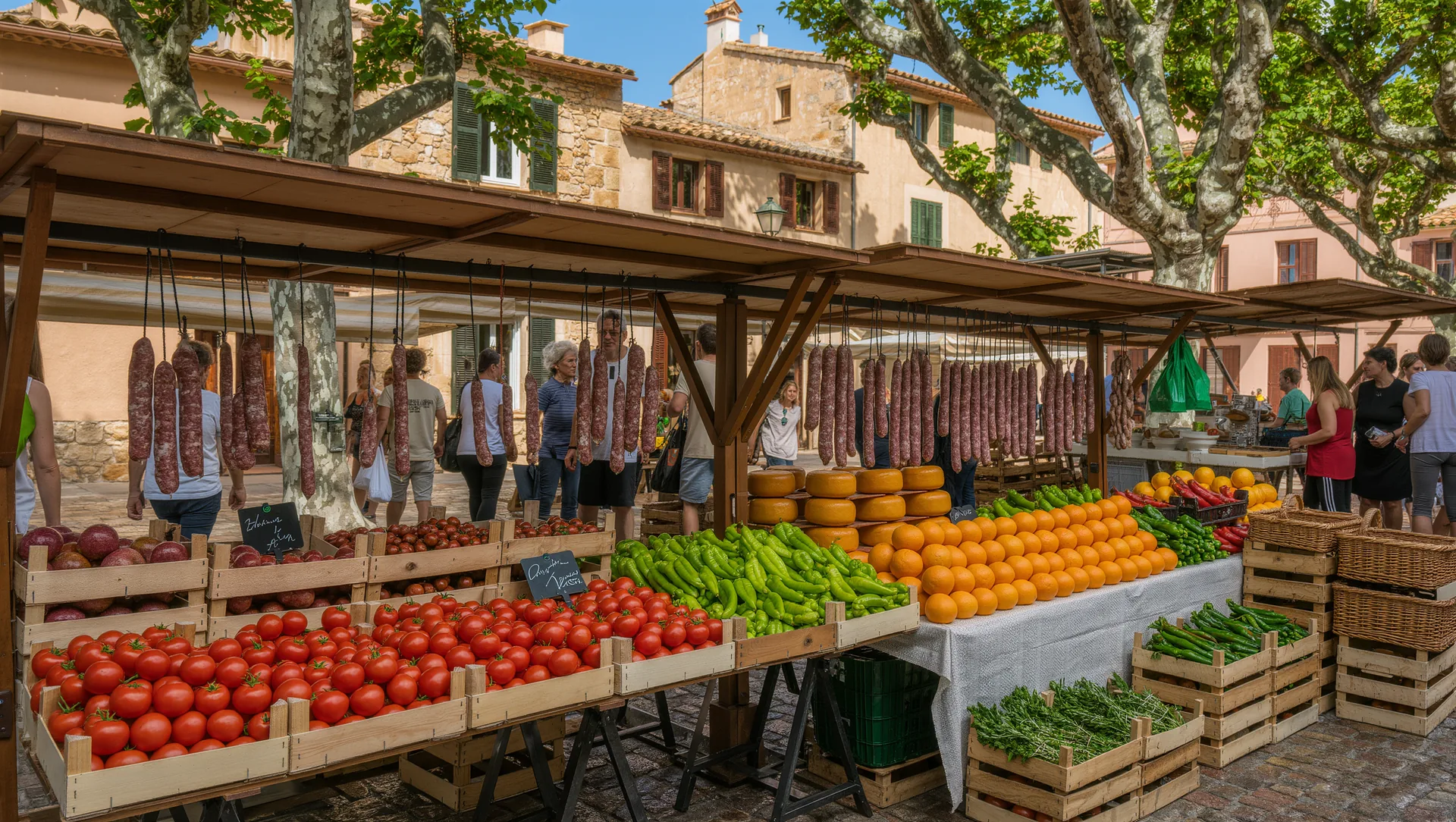
The Sunday market of Santa María del Camí: 500 stalls, and what is worth carrying home
One morning a week, from 9:00 to 14:00 on the Plaça Nova, a village of the Pla turns into one of the largest markets on the island.
Authentic Mallorcan cuisine at family-owned restaurants in Valldemossa
Family kitchens in Valldemossa and the dishes they have not changed.
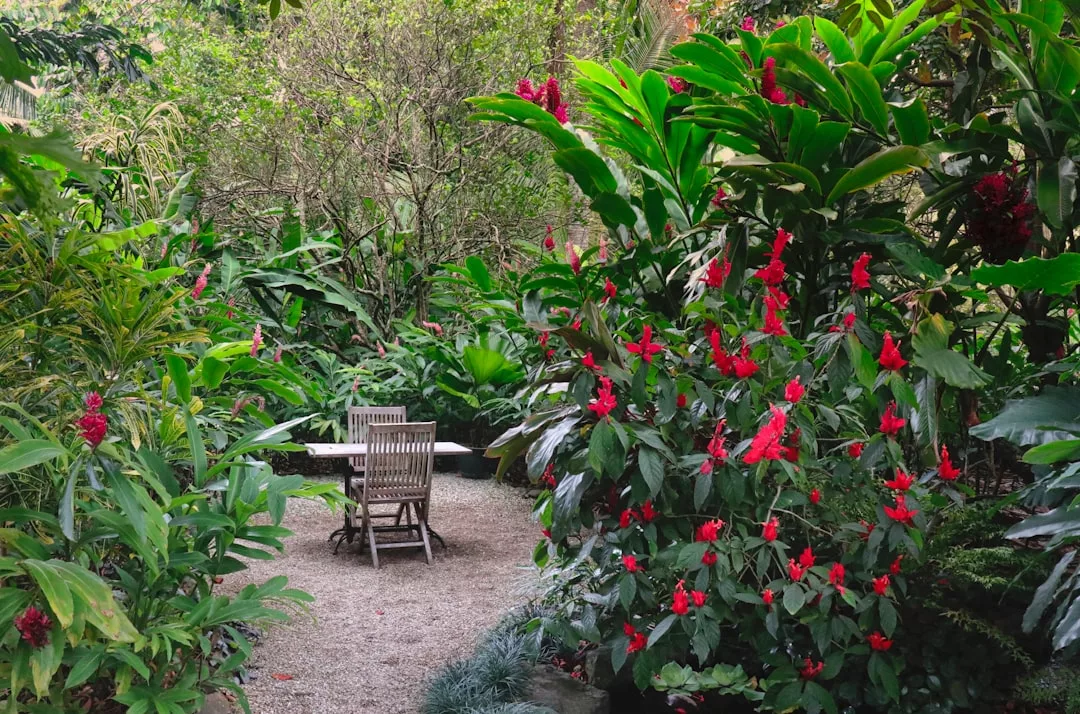
Secluded garden restaurants in Marratxí’s countryside
Tables under the trees in the countryside between Palma and the Pla.