Crewed, bareboat or by the cabin: the three ways to charter in Mallorca
Three products, three price levels, three sets of obligations. The choice is decided by who holds the licence and who carries the risk.
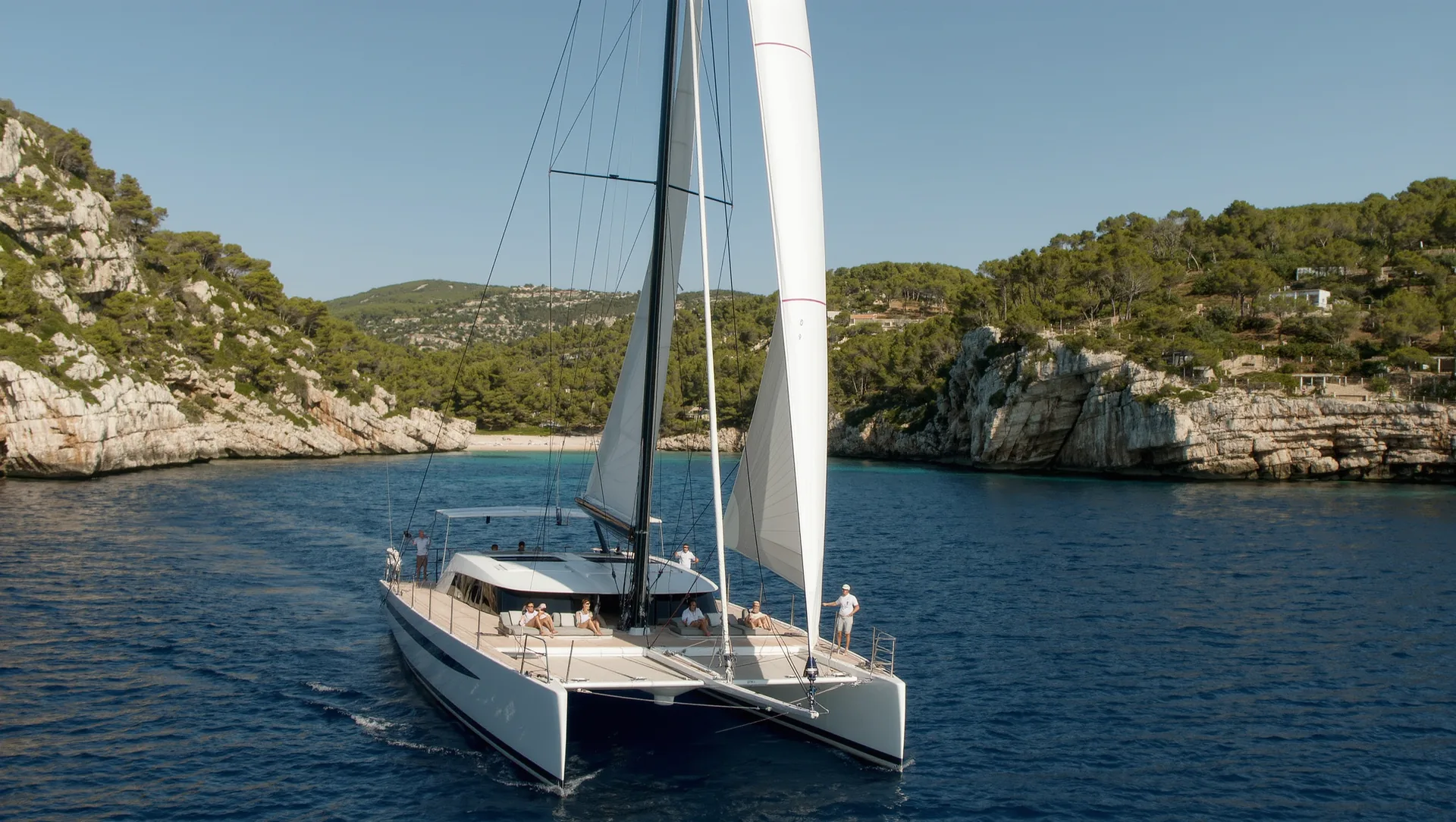
The difference between the three charter models is not comfort, it is responsibility. On a crewed charter the captain carries the vessel and you carry nothing. On a bareboat charter you are the operator, which means a recognised licence, a security deposit and the damage risk. Cabin charter sells you one berth on a boat you do not control. Prices follow that order, and so does the paperwork.
Crewed charter
A crewed yacht comes with a professional captain and, above roughly 20 metres, a stewardess, a deckhand and often a chef. The contract is the MYBA agreement, the pricing model is base fee plus an Advance Provisioning Allowance of 25 to 35 per cent plus 21 per cent Spanish VAT, and the guest limit at sea is 12 on commercially registered yachts, no matter how many cabins the yacht has. Our breakdown of what a charter week actually costs works the arithmetic through.
Bareboat charter
Bareboat means you take the yacht without crew and skipper it yourself. In the Balearics the licence that covers the great majority of the fleet is the Spanish PER, valid for vessels up to 15 metres and up to 12 nautical miles from the coast, night navigation included. Licences issued by other EU member states are accepted. Expect a security deposit in the low thousands, a technical handover of one to two hours and a fuel policy that is settled on return. Skipping the crew typically removes 20 to 30 per cent from the price of the same boat. The licence question is set out in detail in our guide to which skipper licence the Balearics accept.
Cabin charter
Cabin charter sells individual double cabins on a crewed yacht, usually on a fixed weekly route around the island or across to Ibiza and Formentera. It is the only model with a per person price rather than a per yacht price, which puts a week on the water within reach of a normal holiday budget. The trade is control: the itinerary, the cabin allocation and the other guests are not yours to choose.
| Crewed | Bareboat | By the cabin | |
|---|---|---|---|
| Who navigates | Professional captain | You | Professional captain |
| Licence needed | None | PER or equivalent, 15 m and 12 nm | None |
| Priced per | Yacht and week | Yacht and week | Person and week |
| Running costs | APA, 25 to 35 per cent | Fuel and berths, paid direct | Mostly included |
| Security deposit | Rare | Standard | None |
| Itinerary control | Yours, within reason | Total | Fixed route |
Which one fits which week
Bareboat suits sailors who want the Cabrera archipelago at their own pace and who hold a valid ticket. Crewed suits groups of 8 to 12 who value the chef and the tender driver more than the wheel. Cabin charter suits couples who want seven days afloat without chartering an entire yacht. One rule applies to all three: the yacht must hold a valid Spanish charter authorisation, and since 15 August 2025 the operator obligations around passenger logging and identification have tightened. That is the operator's duty, but an irregular boat becomes your problem the moment a patrol boat comes alongside.
Sources
Can I take a bareboat yacht from Mallorca to Ibiza?
Why do crewed yachts carry only 12 guests at sea?
Is a bareboat charter really cheaper?
Do I need my own insurance for a bareboat week?
What happens if the weather turns?
More from Yachting
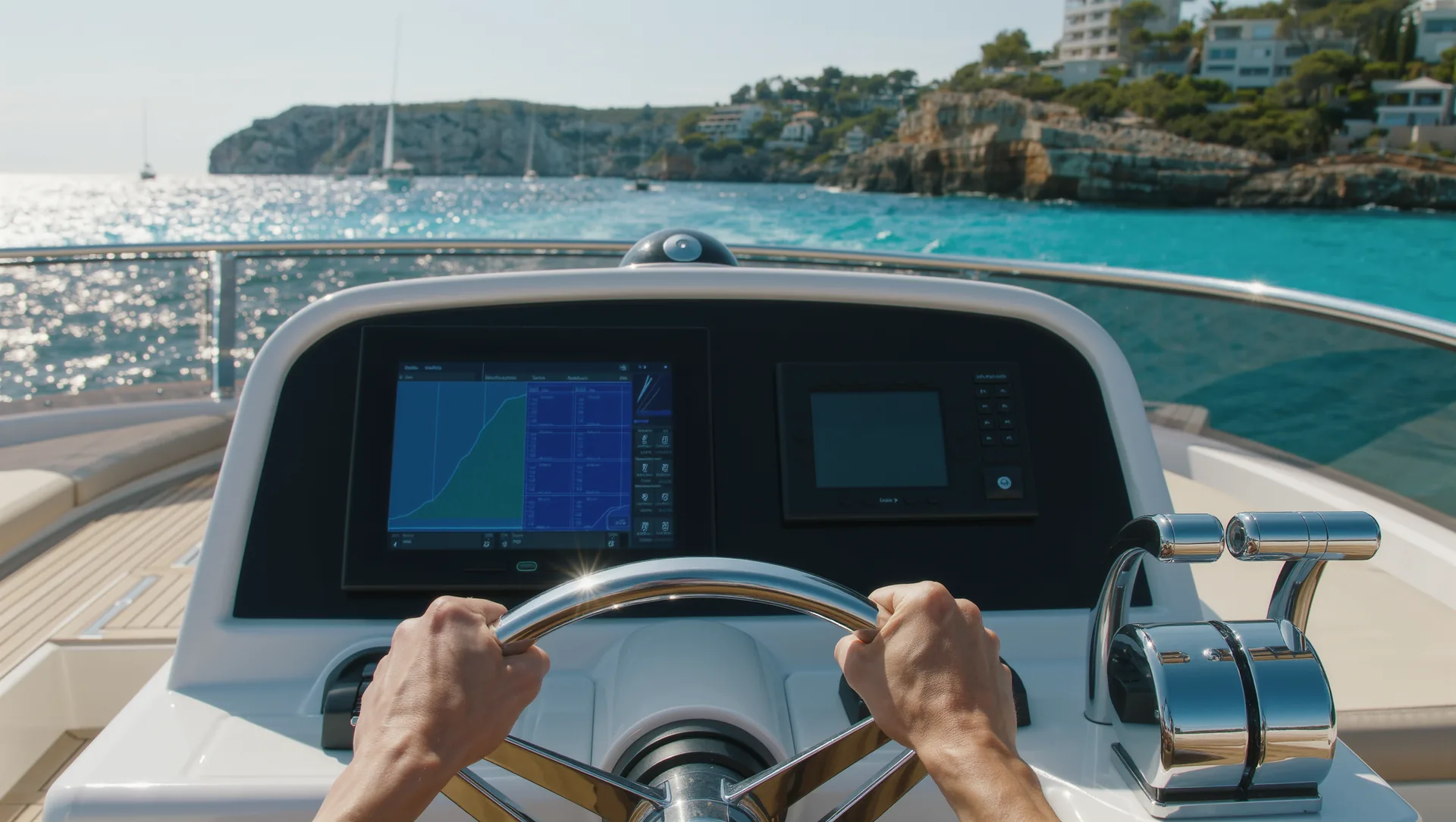
Which skipper licence the Balearics accept
The Spanish PER covers 15 metres and 12 nautical miles, and it is the ticket that unlocks almost the entire Balearic bareboat fleet.
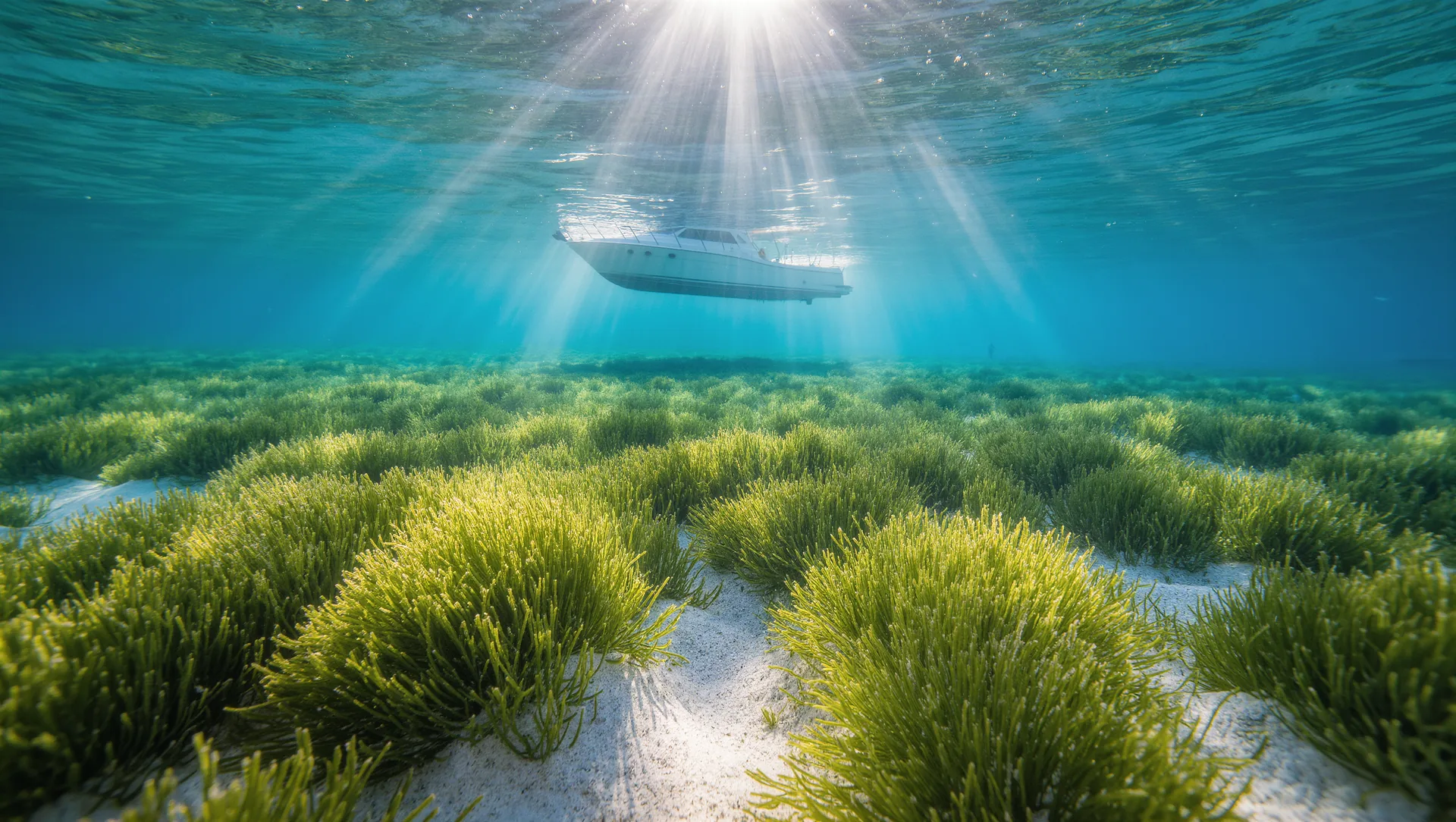
Anchoring over Posidonia: the rule that can cost more than the charter
The Balearics were the first Mediterranean region to ban anchoring on seagrass outright. The penalty scale starts at 100 euros and does not stop at fi
Spain's charter licence rules, and what changed in August 2025
The individual licence is gone, the sworn declaration replaced it, and since 15 August 2025 the identification duties are considerably stricter.