What a week of yacht charter in Mallorca really costs
The advertised base fee is not the price. Budget roughly 1.5 times that number and the invoice will hold no surprises.
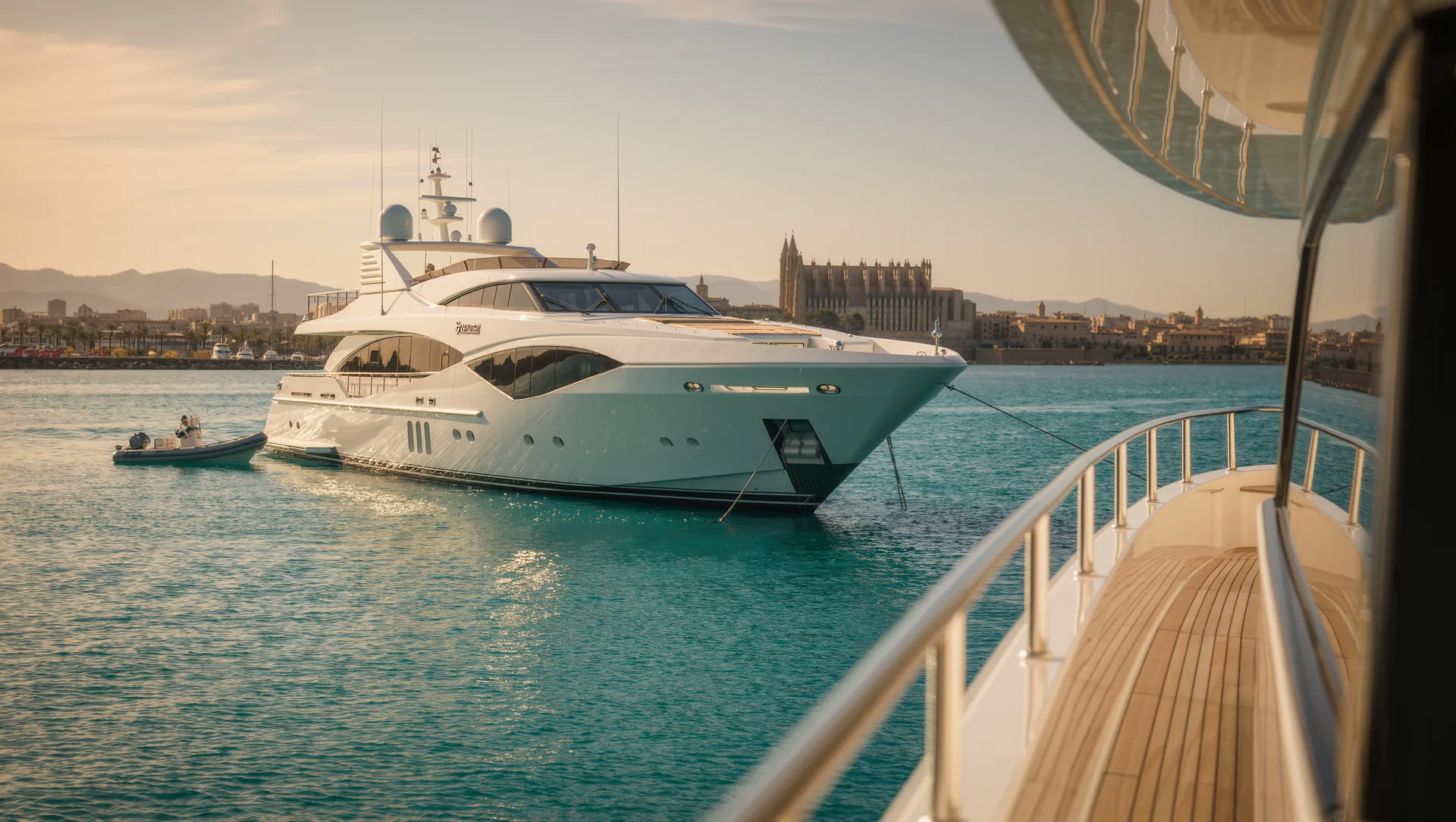
A crewed charter week in Mallorca is quoted as a base fee, and the base fee is roughly two thirds of what you will actually transfer. Add an Advance Provisioning Allowance of 25 to 35 per cent and Spanish VAT of 21 per cent on the charter fee, and a week advertised at 250,000 euros settles near 375,000 euros before a single dinner ashore. That ratio holds for a 45 metre motor yacht and for a 15 metre catamaran alike.
What the base fee buys, and what it does not
Charters in the western Mediterranean are written on the MYBA agreement, and the terms are narrow by design. Broker guidance on those terms lists the base fee as covering the yacht itself, crew salaries, ship's laundry, basic consumables and marine insurance. Everything that gets consumed on your week is funded separately: fuel, food, drink, berthing, port dues, communications and local taxes all come out of the APA. On motor yachts the APA is commonly set at 30 to 35 per cent of the base fee, on sailing yachts it sits nearer 25 per cent, because a sailing yacht burns a fraction of the diesel.
The APA is a deposit, not a fee. It is transferred to the captain before departure, spent on your behalf against receipts, and reconciled at the end of the week. Whatever is left is returned. If a fast passage to Ibiza and back empties it early, the captain will ask for a top up mid week, which is normal and not a sign that something went wrong.
The three numbers that decide the total
Three figures move the invoice more than the yacht itself does: the APA percentage, the VAT rate and the delivery position. Spain applies 21 per cent VAT to charters that begin in Spanish waters, and the same rate applies to delivery and redelivery fees where they are charged. A charter that starts in Palma and ends in Palma carries no delivery fee. One that starts in Palma and ends in Ibiza usually does.
| Line | Basis | Worked example, base 250,000 EUR |
|---|---|---|
| Base fee | Quoted per week | 250,000 EUR |
| APA | 25 to 35 per cent of base | 75,000 EUR at 30 per cent |
| VAT | 21 per cent on the charter fee | 52,500 EUR |
| Delivery | Only if you finish in another port | 0 EUR, Palma to Palma |
| Crew gratuity | Customary 5 to 15 per cent of base | 12,500 to 37,500 EUR |
| Cash needed | 390,000 to 415,000 EUR |
The example above is arithmetic on a round base fee, not a quotation. Real base fees on the Balearic market in high summer run from about 20,000 euros a week for a crewed sailing catamaran to well past 500,000 euros for a 60 metre motor yacht, and the same multipliers apply at both ends.
Where the money actually goes during the week
Fuel dominates on motor yachts. A 40 metre planing yacht at cruising speed can move through several thousand litres a day, which is why captains plan Mallorca itineraries around short hops: Palma to Portals is 20 minutes, Palma to Port de Soller is a comfortable half day, Palma to Ibiza is roughly 55 nautical miles. Berthing is the second line. In August a night alongside in a premium Mallorcan marina is charged in the hundreds of euros for a mid size yacht, and the marinas around the Bay of Palma are the most expensive water on the island. Our guide to what a berth in Mallorca costs sets out the annual and nightly numbers.
How to compare two quotes honestly
Ask three questions before you compare any two offers. First, what APA percentage is assumed, since a quote at 25 per cent looks cheaper than the same yacht at 35 per cent and is not. Second, is VAT shown or excluded, because 21 per cent on a 250,000 euro base is 52,500 euros of difference. Third, is the yacht legally allowed to charter in Balearic waters at all, which is a separate matter covered in our piece on Spain's charter licensing rules. A yacht without a valid Spanish charter authorisation is not a bargain, it is a risk you inherit.
Sources
Is the APA a fee or a deposit?
Does Spanish VAT apply to a charter that only passes through Spanish waters?
How much should the crew gratuity be?
Why is the APA lower on sailing yachts?
Can the captain ask for more money mid charter?
More from Yachting
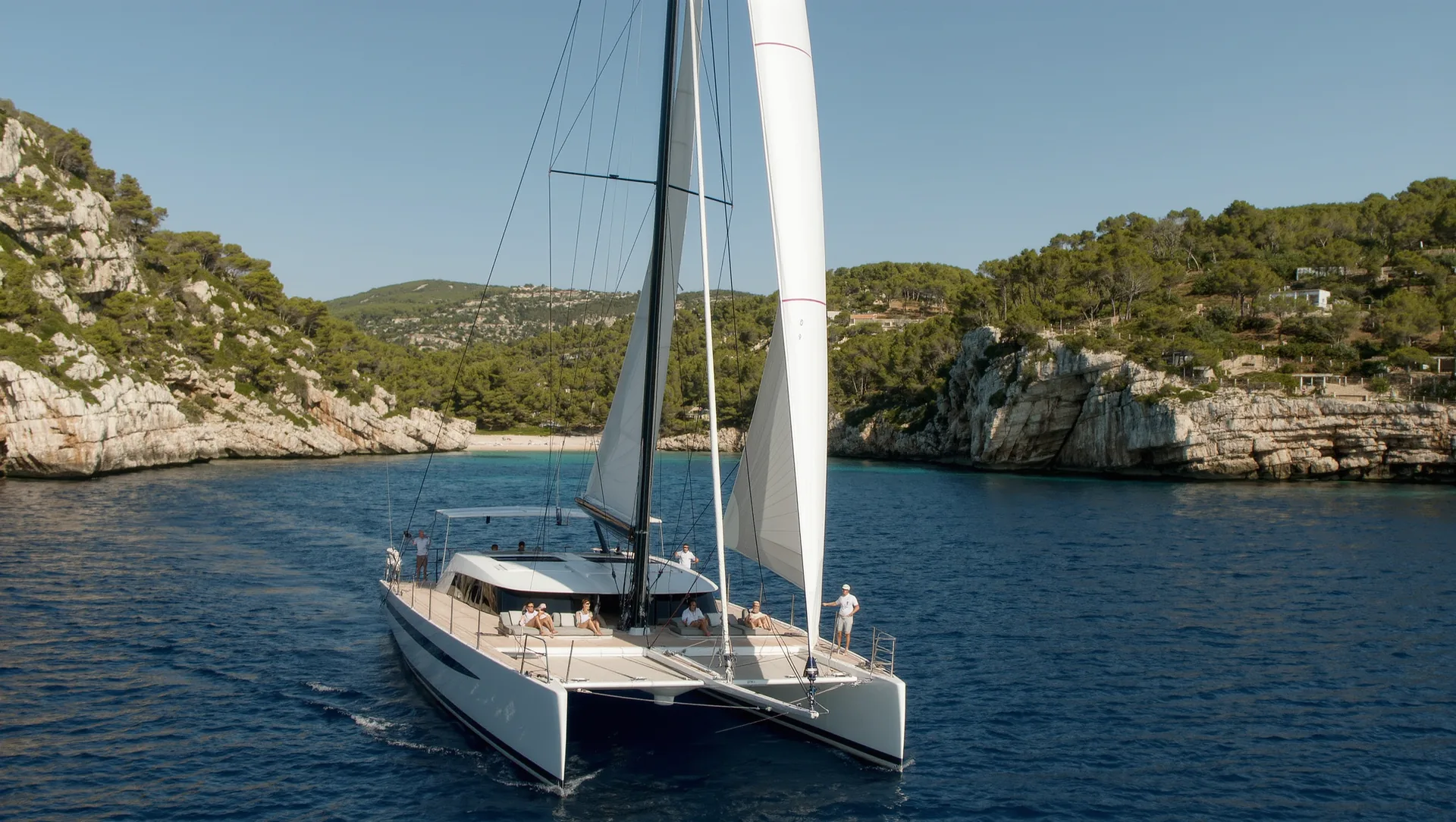
Crewed, bareboat or by the cabin: the three ways to charter in Mallorca
Three products, three price levels, three sets of obligations. The choice is decided by who holds the licence and who carries the risk.
Which skipper licence the Balearics accept
The Spanish PER covers 15 metres and 12 nautical miles, and it is the ticket that unlocks almost the entire Balearic bareboat fleet.

Anchoring over Posidonia: the rule that can cost more than the charter
The Balearics were the first Mediterranean region to ban anchoring on seagrass outright. The penalty scale starts at 100 euros and does not stop at fi