Mallorca Real Estate Guide
Mallorca real estate guide: prime prices from 6,000-15,000 euros per square meter, top areas like Son Vida, finca costs, Golden Visa, taxes and rental rules.…
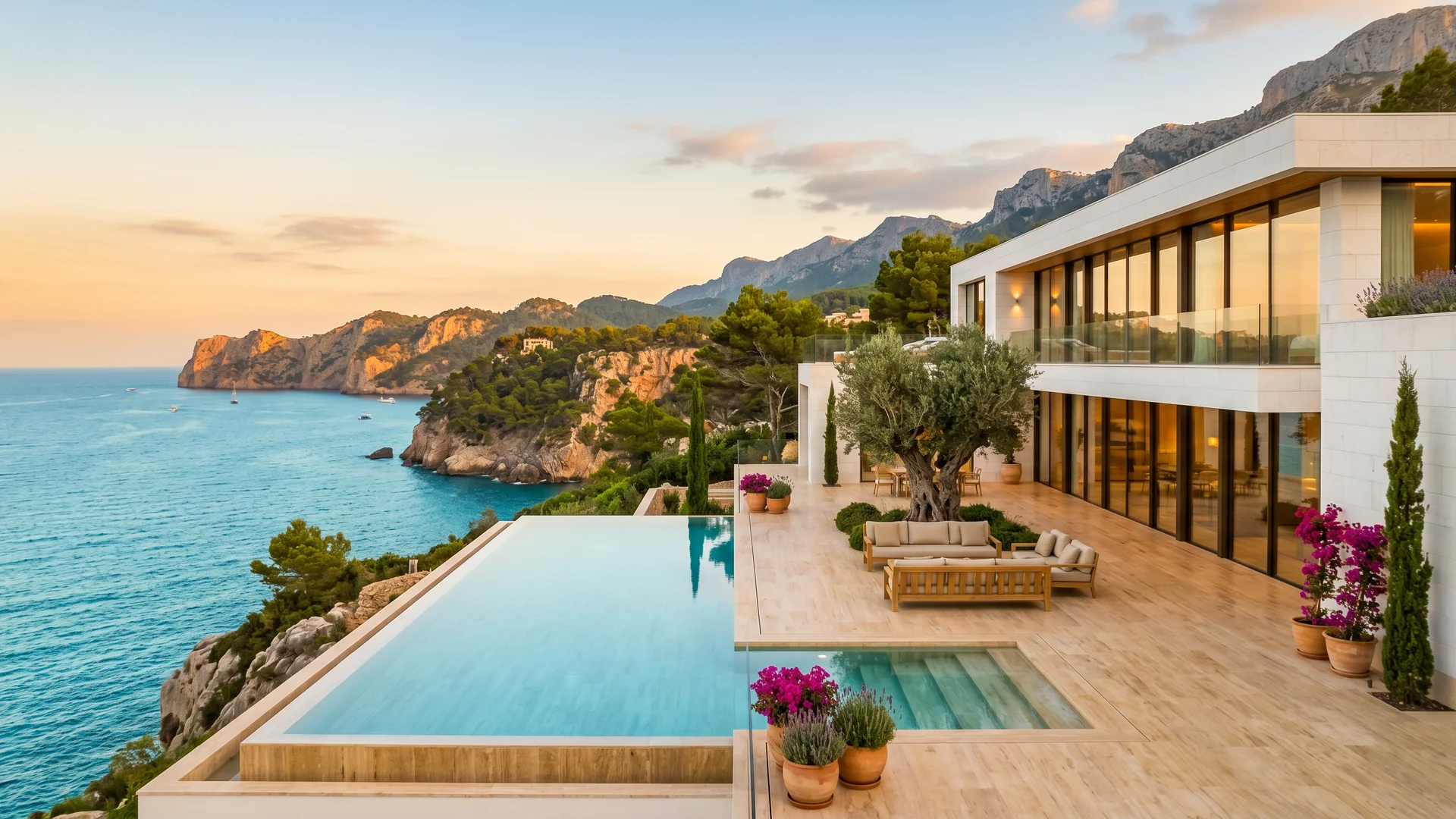
Mallorca's luxury property market spans Son Vida villas to Palma palacios and interior fincas, with prime prices ranging from 6,000 to 15,000 euros per square meter.
Key Takeaways
- Prime property in Mallorca's southwest corridor ranges from 6,000 to 15,000 euros per square meter depending on location, views, and quality.
- Son Vida, often called Mallorca's Beverly Hills, surrounds three golf courses and offers villas from 2 million to over 15 million euros, while Cala Llamp waterfront can reach 25 million or more.
- Spain's Golden Visa program grants non-EU nationals residency in exchange for a property investment of 500,000 euros or more.
- Total purchase costs run 10-13% of the price, including 8-10% transfer tax on resale properties, plus notary, land registry, and legal fees.
- Only properties with a valid tourist license (ETV number) can be legally rented to tourists, and operating without one risks fines exceeding 20,000 euros.
- Long-term rental yields are modest at 3-5% gross in prime areas, but capital appreciation has historically compensated for the lower returns.
- Emerging areas like Arta and Capdepera in the northeast price 40-60% below the southwest, while finca renovations cost 1,500 to 3,000 euros per square meter.
🌐 Also available in: Español
The Mallorca Property Market: An Overview
A Globally Desirable Market
Mallorca’s real estate market has consistently ranked among Europe’s most desirable and resilient. The island’s unique combination of Mediterranean climate, outstanding infrastructure, political stability, and enduring lifestyle appeal has created a property market that attracts buyers from across the globe. From historic townhouses in Palma’s Old Town to cliffside villas in Port d’Andratx, from rustic fincas in the Tramuntana foothills to frontline golf properties in Son Vida, Mallorca offers an extraordinary diversity of luxury real estate.
Market Resilience and Pricing
The market has demonstrated remarkable resilience through economic cycles. The post-pandemic period saw a surge in demand as remote work capabilities and a renewed appreciation for space and nature drove international buyers toward the island. Prices in prime locations have appreciated consistently, with the southwest corridor experiencing the strongest growth. According to leading agencies, prime property prices in these areas now range from 6,000 to 15,000 euros per square meter depending on location, views, and quality.
Prime Residential Areas
Son Vida and Bendinat: The Southwest Luxury Heartland
Son Vida is the island’s most established luxury residential community, often called Mallorca’s Beverly Hills. Located just 10 minutes from central Palma, this gated community surrounds three golf courses and is anchored by the historic Castillo Hotel Son Vida, a 13th-century castle converted into a luxury hotel. The community offers 24-hour security, concierge services, and some of the island’s most prestigious addresses. Properties here range from 2 million euro apartments to villas exceeding 15 million euros. The area is particularly popular with German, British, and Scandinavian buyers.
Bendinat, adjacent to Son Vida on the coastal side, offers a similar proposition with the addition of direct sea views. The community is built around the Real Golf de Bendinat course and borders the royal summer palace of Marivent, guaranteeing that no development will ever obstruct the most prized views. Properties in Bendinat command premium prices, with frontline golf and sea-view villas typically priced between 4 million and 12 million euros.
The Western Coastal Enclaves
Port d’Andratx and Cala Llamp represent the western frontier of Mallorca’s luxury market. The natural harbor of Port d’Andratx, framed by the Tramuntana foothills, has long attracted a discerning international crowd. The nearby enclave of Cala Llamp is even more exclusive, with cliffside villas offering absolute privacy and direct sea access via private staircases and platforms. Properties in these areas are tightly held and rarely come to market; when they do, prices range from 3 million euros for a standard villa to 25 million or more for exceptional waterfront properties.
Puerto Portals and Costa d’en Blanes form the glamorous coastal strip between Palma and Port d’Andratx. Puerto Portals, centered on its superyacht marina, offers a vibrant lifestyle with waterfront dining, designer shopping, and a constant buzz of activity. The hillside villas here offer panoramic sea views and proximity to the marina’s social scene. Costa d’en Blanes, slightly further east, is a quieter residential area with a mix of villas and apartments. Prices in this corridor range from 1.5 million euros for apartments to 10 million for frontline villas.
Deià and the Northwest Coast
Deia and the Northwest Coast offer a more bohemian luxury. The village of Deia, long associated with artists and writers including Robert Graves, has attracted a creative and international community. Properties here, typically stone houses and fincas, command significant premiums for their character and setting, with prices ranging from 1.5 million euros for a village house to 8 million for a substantial finca with sea and mountain views. Nearby Soller and Fornalutx offer similar appeal at slightly more accessible price points.
Palma Old Town
Historic Palacios and Restoration
Palma’s Casco Antiguo (Old Town) has emerged as one of Europe’s most sought-after historic residential districts. The labyrinth of narrow medieval streets contains some of the island’s most beautiful residential architecture, with palacios (historic townhouses) dating from the 13th to 18th centuries. Over the past two decades, many of these properties have been meticulously restored, combining original features like vaulted ceilings, stone archways, and interior courtyards with contemporary luxury amenities.
Key Neighborhoods and Pricing
The most desirable Old Town neighborhoods include Calatrava, a quiet aristocratic quarter near the cathedral; La Seu, the area directly around the cathedral with spectacular views; Santa Creu, a charming area of narrow streets and hidden squares; and La Llotja, popular for its proximity to the Paseo Maritimo and the Born. Prices for restored Old Town properties range from 4,000 to 10,000 euros per square meter, with the finest palacios commanding 3 million to 8 million euros or more.
The Finca Market
Authentic Mallorcan Estates
The finca, a traditional Mallorcan country estate, occupies a special place in the island’s real estate landscape. These stone-built farmhouses, set on land ranging from a few thousand square meters to several hectares, represent the ultimate in authentic Mallorcan living. The best fincas feature original architectural elements: thick stone walls, wooden beam ceilings, interior courtyards, bread ovens, and olive presses. Modern renovations preserve these features while adding swimming pools, guest houses, and contemporary kitchens and bathrooms.
Location and Investment Value
The finca market is concentrated in the island’s interior, particularly around Sencelles, Santa Maria del Cami, Alaro, Lloseta, and the Tramuntana foothills. A small finca requiring renovation might be found for 500,000 to 800,000 euros, while a fully restored finca with several hectares of land and mountain views can command 3 million to 10 million euros. Properties with legal holiday rental licenses command a significant premium, typically 20-30%, due to the income potential.
Legal Considerations for Foreign Buyers
Residency and the Golden Visa
Spain welcomes foreign property buyers, and the purchase process is well-established and transparent. Non-resident buyers from EU countries face no restrictions. Spain’s Golden Visa program, requiring a property investment of 500,000 euros or more, provides a path to residency for non-EU nationals.
The Step-by-Step Purchase Process
The purchase process typically involves: a reservation contract with a deposit of approximately 6,000-12,000 euros; due diligence conducted by a lawyer including verification of title and planning compliance; a private purchase contract with a deposit of 10% of the purchase price; and finally completion before a notary with payment of the balance. Total purchase costs for buyers typically amount to 10-13% of the purchase price, including transfer tax of 8-10% for resale properties, notary fees, land registry fees, and legal fees.
Engaging a Spanish Property Lawyer
It is essential to engage an independent English-speaking lawyer who specializes in Spanish property law. Leading law firms with dedicated real estate practices in Mallorca include Illetas Lex, Bufete Buades, and Von Poll Immobilien.
Leading Real Estate Agencies
International and Established Agencies
Mallorca’s luxury real estate market is served by a sophisticated ecosystem of agencies. Engel & Volkers is the largest operator with multiple offices across the island. Knight Frank and Savills both maintain offices in Mallorca. Balearic Properties, Mallorca Sotheby’s International Realty, Lucas Fox, and Kensington International are other well-regarded agencies with extensive luxury portfolios. Boutique agencies like Dahler & Company and Berendsen Real Estate focus on the highest echelons of the market.
Investment and Rental Potential
The Holiday Rental Market
Mallorca’s property market offers several investment angles. The holiday rental market is robust, with a long season from April through October and strong demand across all price segments. However, rental licensing is strictly regulated, and only properties with a valid tourist license (ETV number) can be legally rented to tourists. The Balearic government has implemented a moratorium on new rental licenses in many areas, making existing licensed properties more valuable.
Long-Term Yields and Capital Appreciation
Long-term rental yields in Mallorca are relatively modest, typically 3-5% gross in prime areas. However, capital appreciation has historically compensated for lower yields. Properties in the 500,000 to 1.5 million euro range in areas with strong tourist demand tend to offer the best rental returns, while trophy properties above 5 million euros are primarily lifestyle investments.
Mallorca’s real estate market continues to demonstrate the qualities that have made it a perennial favorite among international property buyers: exceptional natural beauty, world-class amenities, political and economic stability, and a lifestyle that is increasingly rare in the modern world.
Emerging Areas and Market Trends
The Northeast: Artà and Capdepera
While the southwest corridor remains the traditional heart of Mallorca’s luxury market, several areas are attracting increased attention. The northeast around Artà and Capdepera has seen growing interest, particularly since the opening of the Park Hyatt Mallorca in Canyamel. Prices here remain significantly lower than the southwest, typically 40-60% less for comparable properties, while offering a more authentic, less developed Mallorcan experience. The Llevant Peninsula Natural Park ensures that much of this coastline will remain protected from development.
The Interior Triangle
The interior, particularly the triangle between Santa Maria del Camí, Sineu, and Porreres, has emerged as a strong market for fincas and rural properties. Buyers seeking larger plots of land and greater privacy are increasingly looking beyond the established Tramuntana foothills to this less discovered region. Prices for restored fincas here typically range from 800,000 to 2.5 million euros, offering relative value compared to the Deia or Soller areas.
Sustainability and Energy Efficiency
Sustainability and energy efficiency have become significant factors in the Mallorca property market. New regulations require higher energy performance standards, and buyers increasingly value properties with solar installations, heat pumps, and good insulation. Properties that have been renovated to high energy standards command premiums of 10-15% over comparable non-renovated properties. Water self-sufficiency, through wells, cisterns, and greywater systems, is also increasingly valued, particularly for fincas and rural properties.
Taxation and Ongoing Costs
Annual Property Taxes and Community Fees
Property ownership in Mallorca comes with several ongoing costs that buyers should factor into their calculations. The annual property tax (IBI. Impuesto sobre Bienes Inmuebles) is based on the cadastral value of the property, which is typically significantly lower than the market value. For a villa with a cadastral value of 500,000 euros, the annual IBI might be approximately 1,000-1,500 euros. Community fees for properties within managed developments like Son Vida or Bendinat can range from 500 to 3,000 euros per month depending on the services provided.
Taxation for Non-Resident Owners
Non-resident property owners are subject to an annual imputed income tax in Spain, calculated as a percentage (typically 1.1-2%) of the cadastral value. The actual tax paid is 19% for EU residents and 24% for non-EU residents of this imputed income. For a property with a cadastral value of 500,000 euros, this might result in an annual tax of approximately 1,000-2,400 euros. Wealth tax (Patrimonio) also applies to non-residents on assets in Spain exceeding 700,000 euros, with rates starting at 0.2% and rising progressively.
Rental Income and Licensing Compliance
Rental income from holiday lets is taxed at 19% for EU residents and 24% for non-EU residents on net income (after deductible expenses). Rental properties must be registered with the Balearic tourism authority and display their ETV license number in all advertising. Operating without a license risks fines that can exceed 20,000 euros.
Mallorca’s real estate market rewards those who approach it with patience, good advice, and an understanding of the legal and fiscal framework. The island has attracted property buyers for centuries, from Roman settlers to modern international investors, and for good reason, few places on earth offer such a compelling combination of natural beauty, lifestyle quality, and enduring value.
Construction and Renovation: What to Expect
Navigating Planning Regulations
Building or renovating a property in Mallorca requires navigating Spanish planning regulations, which can be complex, particularly in protected areas. The island’s planning framework is designed to preserve its character and natural beauty, placing restrictions on building height, density, and architectural style. In the Tramuntana mountains, a UNESCO World Heritage site, regulations are particularly stringent, with strict controls on materials, colors, and integration with the landscape.
Finca Renovation: Costs and Timelines
Renovation costs for a finca typically range from 1,500 to 3,000 euros per square meter depending on the standard of finish. A complete restoration of a 300-square-meter finca might cost between 450,000 and 900,000 euros. Construction timelines are generally longer than in Northern Europe, with a full renovation typically taking 12-18 months. Engaging a reputable local architect and builder with experience in the specific area is essential. Firms like Gras Architects, Jaime Salvá Architecture, and Esteva i Esteva have extensive experience with high-end residential projects across the island.
New-Build Villa Construction
For new-build villas, construction costs for luxury specifications range from 3,000 to 5,000 euros per square meter. Plot prices vary enormously by location, from 200 euros per square meter in less sought-after interior areas to over 2,000 euros per square meter in prime coastal locations. The total project cost for a 400-square-meter luxury villa on a prime plot can easily exceed 3.5 million euros before land acquisition.
The Rental Market: Long Term and Seasonal
Long-Term Rental Prices by Location
For those not purchasing, Mallorca’s long-term rental market serves a diverse community of residents, second-home seekers, and remote workers. Long-term rentals in Palma’s desirable neighborhoods, Santa Catalina, El Terreno, the Old Town, range from approximately 1,200 euros per month for a one-bedroom apartment to 3,500 euros or more for a spacious three-bedroom with terrace. In the southwest coastal areas, equivalent properties command premiums of 30-50%.
The Growing Seasonal and Winter Market
The seasonal rental market (typically November to March) has grown significantly, driven by remote workers and long-stay visitors seeking to escape Northern European winters. These rentals, often in properties that operate as holiday lets during summer, offer better value than peak-season rates, a villa that rents for 8,000 euros per week in August might be available for 3,000-4,000 euros per month in winter. This has created a year-round rental ecosystem that benefits both property owners and long-stay visitors.
Mallorca’s property market, for all its complexity, continues to offer exceptional opportunities for those seeking a foothold on one of the Mediterranean’s most desirable islands.
Frequently Asked Questions (FAQ)
How much does luxury real estate cost per square meter in Mallorca?
Prime property prices in Mallorca's southwest corridor range from 6,000 to 15,000 euros per square meter, depending on location, views, and quality. Restored Old Town properties in Palma run from 4,000 to 10,000 euros per square meter, with the finest palacios commanding 3 million to 8 million euros or more.
What is Son Vida and why is it Mallorca's most prestigious area?
Son Vida is Mallorca's most established luxury residential community, often called the island's Beverly Hills. Located 10 minutes from central Palma, this gated community surrounds three golf courses and is anchored by the 13th-century Castillo Hotel Son Vida. It offers 24-hour security and concierge, with villas exceeding 15 million euros.
Can foreigners buy property in Mallorca and get residency?
Yes, Spain welcomes foreign buyers and non-resident EU buyers face no restrictions. Spain's Golden Visa program provides non-EU nationals a path to residency with a property investment of 500,000 euros or more. The purchase process is well-established and transparent, conducted before a notary with lawyer-led due diligence.
What are the total costs of buying a property in Mallorca?
Total purchase costs typically amount to 10-13% of the purchase price. This includes a transfer tax of 8-10% for resale properties, plus notary fees, land registry fees, and legal fees. The process starts with a reservation deposit of roughly 6,000-12,000 euros and a 10% deposit on signing the private contract.
Do I need a tourist license to rent out my Mallorca property to holidaymakers?
Yes, only properties with a valid tourist license, known as an ETV number, can be legally rented to tourists in Mallorca. Properties must be registered with the Balearic tourism authority and display the ETV number in all advertising. Operating without a license risks fines that can exceed 20,000 euros.
What is a Mallorcan finca and how much does one cost?
A finca is a traditional Mallorcan country estate, a stone-built farmhouse set on land from a few thousand square meters to several hectares. A small finca needing renovation may cost 500,000 to 800,000 euros, while a fully restored finca with several hectares and mountain views can reach 3 million to 10 million euros.
Which emerging areas in Mallorca offer better value than the southwest?
The northeast around Arta and Capdepera offers prices typically 40-60% lower than the southwest for comparable properties, helped by the Park Hyatt Mallorca in Canyamel. The interior triangle between Santa Maria del Cami, Sineu, and Porreres is strong for fincas, with restored properties ranging from 800,000 to 2.5 million euros.
What taxes do non-resident property owners pay in Mallorca?
Non-resident owners pay an annual imputed income tax on a percentage of the cadastral value, taxed at 19% for EU residents and 24% for non-EU residents. Wealth tax (Patrimonio) applies on Spanish assets exceeding 700,000 euros, with rates from 0.2%. Annual IBI property tax and community fees also apply.
More from Mallorca
Mallorca Nightlife Guide
Mallorca nightlife guide: Palma cocktail bars, Puerto Portals marina glamour, superclubs Pacha and BCM, beach clubs, traditional cellers and casinos a…
Mallorca Culture Guide
Mallorca culture guide: explore Palma Cathedral, Miro and Picasso museums, Castell de Bellver, Talayotic ruins, Valldemossa, festivals, crafts and the…
Mallorca Luxury Hotels
Discover Mallorca’s best luxury hotels, from Belmond La Residencia and cliffside Cap Rocat to St. Regis Mardavall, with rates, Michelin dining a…