Mallorca Culture Guide
Mallorca culture guide: explore Palma Cathedral, Miro and Picasso museums, Castell de Bellver, Talayotic ruins, Valldemossa, festivals, crafts and the Mallorqui language.…
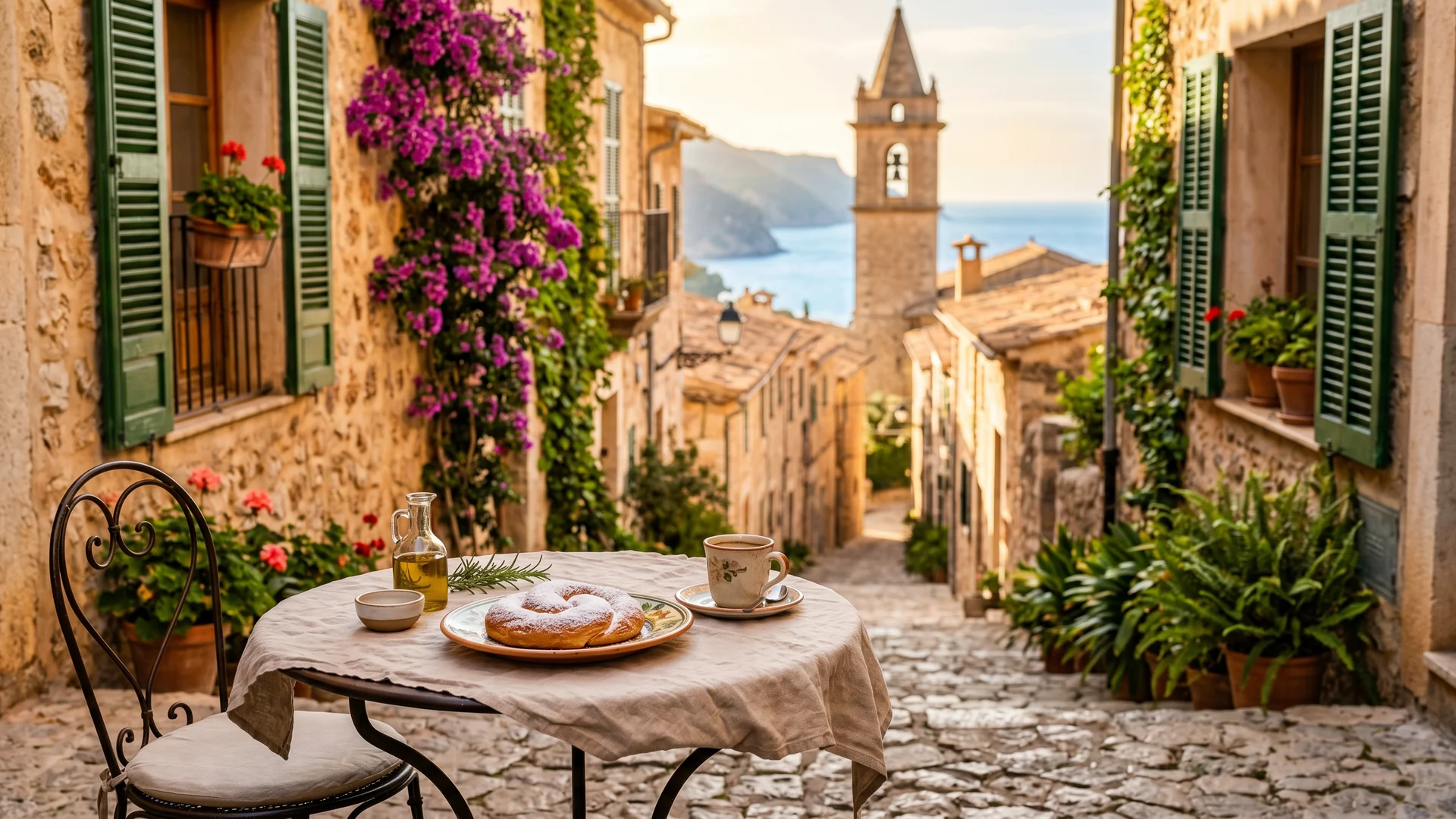
Mallorca's culture spans Gothic landmarks like La Seu and Castell de Bellver, museums devoted to Miro and Picasso, Talayotic ruins, and living traditions of music, language and craft.
Key Takeaways
- La Seu (Palma Cathedral), begun in 1229, is one of Europe's great Gothic cathedrals with a 44-meter nave, a Gaudi-designed altar canopy and a 2007 ceramic mural by Miquel Barcelo; entry is 9 euros.
- Castell de Bellver is a rare circular 14th-century castle built for King Jaume II that now houses Palma's history museum, while the 15th-century La Llotja maritime exchange offers free entry.
- Key art venues include Es Baluard modern art museum (6 euros, free Saturdays after 15:00), the Fundacio Pilar i Joan Miro with over 6,000 works, the free Museu Fundacion Juan March, and CCA Andratx.
- Valldemossa's Real Cartuja hosted Chopin and George Sand in winter 1838-39, inspiring her book A Winter in Majorca; English poet Robert Graves lived in Deia and wrote I, Claudius there.
- Talayotic sites dating from roughly 1300 to 123 BC, such as Capocorb Vell, Ses Paisses and Son Fornes, feature talayots, navetas and taulas found only on Mallorca and Menorca.
- Mallorca's living culture includes the Mallorqui language, the glosat improvised sung poetry celebrated at the Festa des Glosat in Manacor, siurell clay whistles, and glassblowing at Gordiola since 1719.
- Festivals such as Festival de Pollenca, Festival de Deia, the Mallorca Jazz Festival and the city-wide Nit de l'Art anchor the island's contemporary cultural calendar.
🌐 Also available in: Español
Mallorca’s Rich Cultural Tapestry
Layers of History
Mallorca’s cultural heritage is as deep and layered as its geology. The island has been shaped by successive civilizations, Talayotic, Phoenician, Roman, Byzantine, Moorish, Catalan, and Spanish, each leaving their mark on the landscape, architecture, language, and traditions. Today, Mallorca boasts a vibrant contemporary cultural scene that encompasses world-class museums and galleries, a thriving artist community, a distinguished musical tradition, and a calendar of festivals that blend ancient ritual with modern creativity.Architectural Treasures
Sacred and Royal Architecture
La Seu (Palma Cathedral) is Mallorca’s most iconic building and one of Europe’s great Gothic cathedrals. Construction began in 1229 following the Christian reconquest of Mallorca and continued for over 400 years, resulting in a building of extraordinary scale, the nave rises 44 meters, among the highest of any Gothic cathedral. The interior was dramatically reimagined in the early 20th century by Antoni Gaudi, who designed the canopy over the altar, and later by the contemporary artist Miquel Barcelo, whose ceramic mural in the Santisimo Chapel (2007) depicts the miracle of the loaves and fishes in a style that fuses religious iconography with marine biology. Entry 9 euros. The cathedral terrace offers exceptional views over Palma and the bay.Palau de l’Almudaina, adjacent to the cathedral, began as a Moorish alcazar and was transformed into a Gothic palace by the Kings of Mallorca. The royal apartments are furnished with tapestries, paintings, and furniture from various periods. The palace remains an official residence of the Spanish royal family. Entry 7 euros.
Military and Civic Masterpieces
Castell de Bellver, a circular 14th-century castle on a wooded hill overlooking Palma, is unique in Spain, one of only a handful of circular castles in Europe. Built as a royal residence for King Jaume II, it later served as a military prison. Today it houses Palma’s history museum and offers the finest panoramic views of the city and bay. Entry 4 euros.La Llotja, Palma’s 15th-century maritime exchange, is a masterpiece of Catalan Gothic civil architecture. The main hall, with its six spiraling columns fanning out into the vaulted ceiling, is a space of extraordinary grace. The building now hosts temporary art exhibitions. Free entry.
Art Museums and Galleries
Palma’s Major Museums
Es Baluard Museu d’Art Modern i Contemporani, housed in a 16th-century bastion integrated with a striking contemporary building, is Mallorca’s premier modern art museum. The permanent collection includes works by Mallorcan and Balearic artists alongside international figures including Picasso, Miro, and Barcelo. The museum’s terrace offers spectacular views over the harbor and cathedral. Entry 6 euros, free on Saturdays after 15:00.Fundacio Pilar i Joan Miro, located on the outskirts of Palma, occupies the studios where Joan Miro lived and worked from 1956 until his death in 1983. The complex includes Miro’s original studio (designed by his friend Josep Lluis Sert), a second studio in a traditional Mallorcan house, and a modern museum building housing over 6,000 works. The garden features several of Miro’s sculptures. It is an essential pilgrimage for admirers of one of the 20th century’s greatest artists. Entry 8 euros.
The March Collection and CCA Andratx
Museu Fundacion Juan March in Palma’s Old Town houses an important collection of 20th-century Spanish art, including works by Picasso, Miro, Dali, and Juan Gris, along with rotating temporary exhibitions. Housed in a beautifully restored 17th-century mansion. Free entry.CCA Andratx, located in a former factory near Port d’Andratx, is one of Europe’s most significant contemporary art centers outside major cities. The complex includes gallery spaces, artist studios, and a sculpture garden. The program features international contemporary artists in rotating exhibitions. The on-site restaurant is excellent. Entry varies by exhibition.
Contemporary Galleries
Galeria Pelaires in Palma, founded in 1969, is one of Spain’s oldest contemporary art galleries. Located in a former palace, it represents major Spanish and international artists and is a focal point of Palma’s art scene, particularly during Nit de l’Art.Historic Towns and Villages
Mountain Villages
Valldemossa, in the Tramuntana mountains, is famous for the Real Cartuja (Royal Charterhouse), a former monastery where the composer Frederic Chopin and writer George Sand spent the winter of 1838-39. Sand’s account of their stay, “A Winter in Majorca,” brought the island to international attention. The monastery complex includes the church, pharmacy, palace of King Sancho, and the cells where Chopin composed, including the piano he used. Entry 12 euros. The village itself, with its stone houses adorned with flower boxes, is one of Mallorca’s most beautiful.Pollenca, in the north, is distinguished by its 365-step Calvari (Calvary) stairway leading to a hilltop chapel and its Roman bridge. The town has a strong artistic heritage and hosts a prestigious classical music festival each summer. The Sunday market is one of the island’s best.
Walled Towns of the Interior
Alcudia, on the northeast coast, preserves its medieval walls and Roman ruins (the Roman city of Pollentia, founded 123 BC, was one of Mallorca’s most important ancient settlements). The old town within the walls is a delight to explore, with narrow streets, stone houses, and excellent restaurants.Arta, in the northeast interior, is dominated by the Santuari de Sant Salvador, a fortified church and pilgrimage site atop a hill with panoramic views. The town’s Tuesday market is one of Mallorca’s most authentic, attracting few tourists.
Music and Performing Arts
Classical Music and Opera
Mallorca has a distinguished musical tradition. The Palma Symphony Orchestra (Orquestra Simfonica de les Illes Balears), founded in 1988, performs a regular season at the Auditorium de Palma, a striking modern concert hall on the Paseo Maritimo. The auditorium also hosts visiting orchestras, opera productions, and contemporary music.
The Teatre Principal in Palma, dating from 1667 and rebuilt in the 19th century, is the city’s historic opera house, hosting opera, ballet, theater, and concerts in a beautifully restored neoclassical setting. The programming includes both classic repertoire and contemporary work.
Festivals and Folk Traditions
The Festival de Pollenca (July-August) and the Festival de Deia (June-August) are the island’s premier classical music festivals, attracting internationally renowned performers to intimate historic settings. The Mallorca Jazz Festival, now in its fourth decade, brings international jazz artists to venues across the island.
Mallorca’s traditional music, centered on the xeremies (Mallorcan bagpipes), flabiol (one-handed flute), and various percussion instruments, remains alive in village fiestas and folk dance performances. The ball de bot, the traditional Mallorcan folk dance, is performed at festivals across the island, often accompanied by singing in the Mallorcan dialect.
Literary Mallorca
Ramon Llull: Mallorca’s Medieval Philosopher
Mallorca has inspired writers for centuries. Ramon Llull (1232-1316), born in Palma, was one of medieval Europe’s most important philosophers and the first major writer in the Catalan language. His works, written in Catalan, Latin, and Arabic, cover theology, philosophy, logic, and mysticism. The Ramon Llull Institute in Palma promotes his legacy, and his tomb in the Basilica de Sant Francesc is a site of pilgrimage.
The Deià Writers: Graves and Sand
Robert Graves, the English poet and novelist, lived in Deia from 1929 until his death in 1985. His house, Ca n’Alluny, is now a museum offering a fascinating glimpse into his life and work. Graves is buried in the small cemetery on the hill above Deia, his grave marked by a simple stone. The house where he lived and wrote “I, Claudius” is preserved much as he left it. Entry 8 euros.
George Sand’s “A Winter in Majorca” (1842) remains perhaps the most famous book about the island, despite, or perhaps because of, its sometimes scathing descriptions. The book chronicles her stay in Valldemossa with Chopin and their infant son, and while she was critical of the islanders (whom she described as “monkeys”), the book established Mallorca in the European imagination.
Mallorca in Modern Fiction
Contemporary literature set in Mallorca includes Agatha Christie’s short story “Problem at Pollensa Bay” (inspired by her visits to the island) and Carlos Ruiz Zafon’s “The Angel’s Game,” partially set in a mysterious mansion on the Mallorcan coast.
Talayotic Heritage
Mallorca’s Prehistoric Past
Mallorca’s prehistory is visible in the Talayotic sites scattered across the island, dating from approximately 1300 to 123 BC. These megalithic structures, talayots (stone towers), navetas (boat-shaped burial chambers), and taulas (T-shaped stone monuments), represent a unique culture found only on Mallorca and Menorca. The Talayotic Culture of Menorca was inscribed as a UNESCO World Heritage site in 2023, and Mallorca’s sites are similarly impressive.Key Archaeological Sites
Significant sites on Mallorca include Capocorb Vell near Llucmajor (five square and circular talayots), Ses Paisses near Artà (a complete Talayotic village with walls, houses, and a central plaza), and Son Fornes near Montuïri (with a large circular talayot and museum). The Museu Arqueologic de Son Fornes provides context for understanding this enigmatic culture. Entry to most sites is free or nominal (approximately 3-5 euros).
Cultural Tourism in Practice
Planning Your Cultural Itinerary
Mallorca’s cultural attractions are concentrated in Palma, which can easily occupy several days of exploration. The cathedral, Almudaina palace, and Es Baluard museum form a natural cluster at the seafront end of the Old Town, while the Miro Foundation requires a short taxi or bus journey. A good strategy is to combine mornings of sightseeing with afternoons exploring Palma’s shops, cafés, and hidden squares.Day Trips and Practical Tips
Beyond Palma, the cultural highlights are best explored by car. Valldemossa and Deia can be combined into a day trip through the Tramuntana, as can Pollenca and Alcudia. The Talayotic sites in the southeast (Capocorb Vell, Son Fornes) work well in combination with visits to the beaches of Es Trenc or the Santanyi market.
Most museums and monuments offer reduced entry on specific days or times, typically Sunday afternoons or Wednesday mornings. The Palma Pass, available at tourist offices, offers reduced entry to multiple attractions.
Living Culture
Mallorca’s culture is not confined to museums and monuments. It lives in the weekly markets, the village fiestas, the traditional songs still sung in bars, and the pride islanders take in their language, cuisine, and way of life. The culturally curious traveler who engages with these living traditions will find a Mallorca far richer than the beach brochure version.
Mallorca’s cultural heritage, ancient and modern, artistic and musical, literary and architectural, offers a depth of experience that rewards sustained exploration. The island that inspired Ramon Llull, Chopin, Miro, and Graves continues to nurture creativity and preserve tradition, making it one of the Mediterranean’s most culturally significant destinations.
The Mallorcan Language and Identity
Mallorquí: The Island’s Tongue
Central to Mallorca’s cultural identity is its language. Mallorquí, the local variant of Catalan, is spoken alongside Spanish and reflects the island’s deep historical connection to Catalonia and the broader Catalan-speaking world. Street signs are bilingual, and the language is taught in schools and used in local government. For visitors, even a few words of Mallorquí, bon dia (good morning), gràcies (thank you), adéu (goodbye), are warmly appreciated.
Oral Traditions and the Glosat
The island’s linguistic heritage is celebrated in its rich oral tradition. The glosat, an improvised sung poetry form similar to the payada of Argentina or the improvised verse traditions of the Mediterranean, remains alive in village fiestas and competitions. Two or more glosadors engage in witty, often humorous improvised verse exchanges on topics suggested by the audience, accompanied by a xeremier (bagpipe player). The annual Festa des Glosat in Manacor celebrates this unique tradition.
Contemporary Art and the Creative Economy
Mallorca’s Contemporary Art Scene
Mallorca’s artistic tradition extends powerfully into the present. The island has become a significant hub for contemporary art production, with a growing community of international artists who maintain studios on the island. The concentration of wealth has created a collector base that supports a sophisticated gallery ecosystem, while the island’s quality of life and relative accessibility make it attractive to artists seeking a Mediterranean base.The CCA Andratx (Centro Cultural Andratx), founded in 2004, has become one of Europe’s most respected contemporary art centers outside major cities. Its program of exhibitions, artist residencies, and events has brought significant international attention to Mallorca’s art scene. The annual Nit de l’Art has grown from a local gallery night into a city-wide contemporary art event that attracts international curators, collectors, and media.
Craft and Design
The creative economy extends beyond fine art. Mallorca has developed a reputation for craft-based luxury, handmade leather goods, artisanal ceramics, bespoke furniture. Workshops in villages across the island produce work that is sold in the world’s finest design stores. The annual Mallorca Design Week celebrates this intersection of craft, design, and luxury.
Traditional Crafts at Risk and Revival
Endangered Traditions
Several traditional Mallorcan crafts face challenges from modernization, but a revival movement is underway. The production of llatra (woven palm frond) baskets, hats, and mats, once a common cottage industry, has declined dramatically, but a few artisans continue the tradition, particularly in the Artà area. The siurell, a small clay whistle figurine traditionally made in white with red and green decoration, is one of Mallorca’s most distinctive folk art forms. The workshop of the Amengual family in Consell continues to produce siurells using traditional methods, and the figurines can be purchased directly from the workshop.
The Art of Glassblowing at Gordiola
The art of glassblowing, practiced at the Gordiola factory near Algaida since 1719, continues to thrive. The factory’s museum houses an extraordinary collection of antique glass, and watching the glassblowers at work in the furnace room, their movements precise and practiced, the molten glass glowing orange, is a mesmerizing experience. The showroom sells pieces ranging from small drinking glasses to elaborate chandeliers.
Mallorca’s culture is not a museum piece but a living, evolving tradition. The island honors its past while embracing creativity and innovation, creating a cultural landscape that offers something genuinely valuable to the curious traveler.
Frequently Asked Questions (FAQ)
How much does it cost to visit Palma Cathedral (La Seu) in Mallorca?
Entry to La Seu, Palma Cathedral, costs 9 euros. Begun in 1229 after the Christian reconquest and built over more than 400 years, it is one of Europe's great Gothic cathedrals, with a nave rising 44 meters. The terrace offers exceptional views over Palma and the bay.
What are the best art museums to see in Palma, Mallorca?
Palma's leading art museums are Es Baluard Museu d'Art Modern i Contemporani (6 euros, free Saturdays after 15:00), the Fundacio Pilar i Joan Miro with over 6,000 works, and the free Museu Fundacion Juan March, which holds 20th-century Spanish art by Picasso, Miro, Dali and Juan Gris.
Why is Valldemossa in Mallorca famous?
Valldemossa, in the Tramuntana mountains, is famous for the Real Cartuja, a former monastery where composer Frederic Chopin and writer George Sand spent the winter of 1838-39. Sand's account, A Winter in Majorca, brought the island to international attention. Entry to the monastery is 12 euros.
What are the Talayotic sites on Mallorca?
Talayotic sites are prehistoric megalithic structures dating from roughly 1300 to 123 BC, featuring talayots, navetas and taulas found only on Mallorca and Menorca. Significant Mallorcan examples include Capocorb Vell near Llucmajor, Ses Paisses near Arta and Son Fornes near Montuiri. Entry is typically free or around 3 to 5 euros.
Which writers and artists are connected to Mallorca?
Mallorca inspired medieval philosopher Ramon Llull, born in Palma in 1232, plus Chopin and George Sand in Valldemossa, and English poet Robert Graves, who lived in Deia and wrote I, Claudius there. Painters Joan Miro and Pablo Picasso are central to the island's museum collections.
What traditional crafts can you find on Mallorca?
Mallorcan crafts include llatra woven palm-frond baskets and hats, still made around the Arta area, and the siurell, a white clay whistle figurine decorated in red and green produced by the Amengual family in Consell. Glassblowing has been practiced at the Gordiola factory near Algaida since 1719.
What is the Mallorqui language?
Mallorqui is the local variant of Catalan spoken on the island alongside Spanish, reflecting Mallorca's deep historical connection to Catalonia. Street signs are bilingual, and the language is taught in schools and used in local government. Visitors are warmly appreciated for words like bon dia, gracies and adeu.
How should you plan a cultural itinerary in Mallorca?
Concentrate first on Palma, where the cathedral, Almudaina palace and Es Baluard form a natural seafront cluster, with the Miro Foundation a short taxi or bus ride away. Beyond Palma, explore by car: combine Valldemossa with Deia, or Pollenca with Alcudia. The Palma Pass offers reduced entry to multiple attractions.
More from Mallorca
Mallorca Nightlife Guide
Mallorca nightlife guide: Palma cocktail bars, Puerto Portals marina glamour, superclubs Pacha and BCM, beach clubs, traditional cellers and casinos a…
Mallorca Luxury Hotels
Discover Mallorca’s best luxury hotels, from Belmond La Residencia and cliffside Cap Rocat to St. Regis Mardavall, with rates, Michelin dining a…
Mallorca Beaches Guide
Mallorca beaches guide: from Caribbean-style Es Trenc and family-friendly Playa de Muro to luxury beach clubs, water sports and dramatic Tramuntana co…